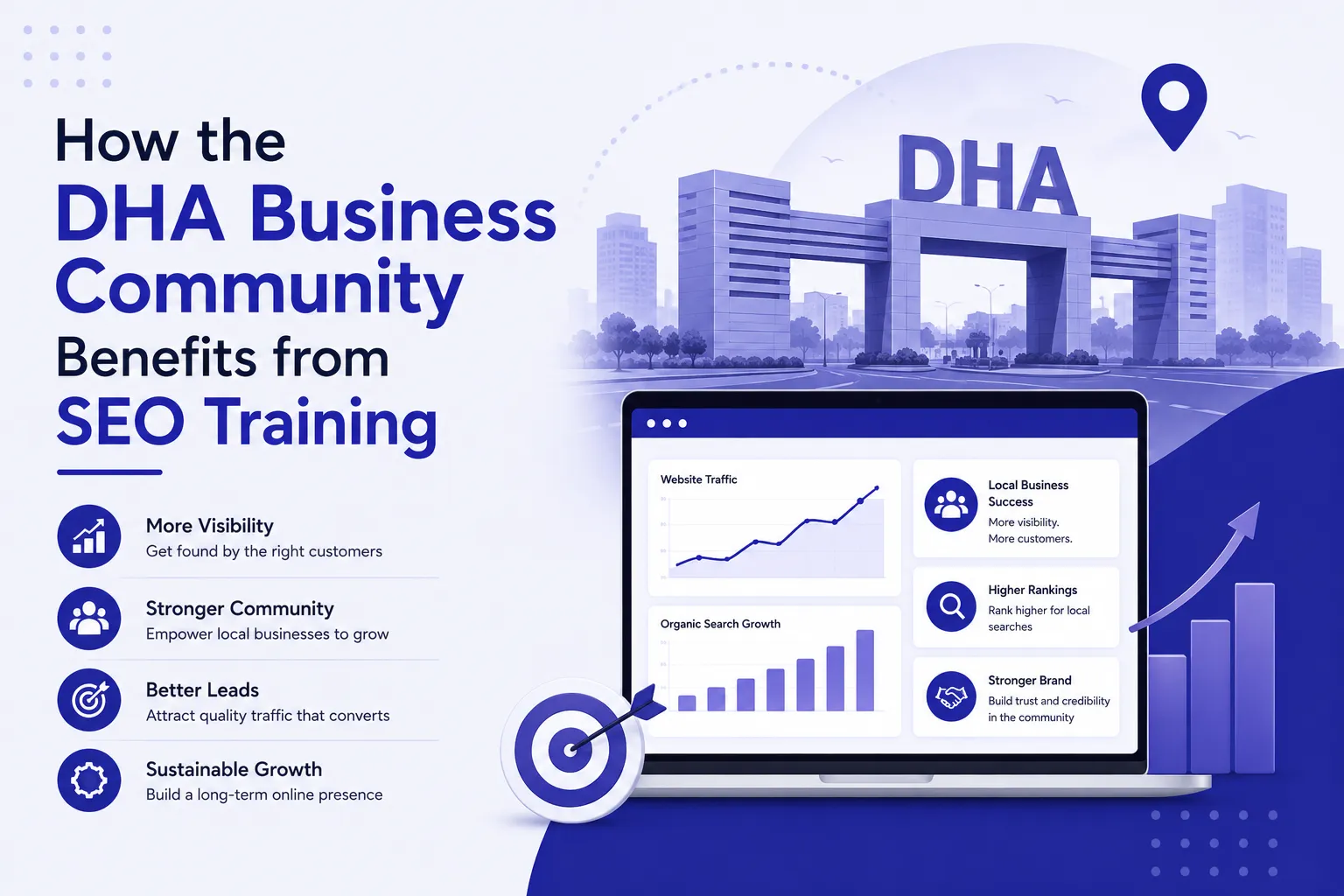

The first time I ran an SEO training session for a small group of DHA business owners, I expected the usual questions about Facebook ads and Instagram reach. Instead, the room was full of shopkeepers, clinic owners, and boutique managers asking something much more specific: “Why does the shop two streets away show up on Google before mine, when I have been here longer?” That question, more than any slide in my presentation, captured exactly why SEO training matters so much for a community like DHA.
DHA is not a typical business district. It is a self-contained ecosystem of phases and sectors, each with its own cluster of boutiques, clinics, restaurants, real estate offices, and home service providers, most of them competing for the same nearby customers. In a market this dense, ranking visibility is not a luxury, it is often the difference between a fully booked week and an empty one.
Why DHA Is a Unique SEO Opportunity
What makes DHA interesting from an SEO perspective is the sheer concentration of small, independently run businesses within a tightly defined geographic area. Unlike a scattered city-wide market, DHA residents tend to search hyper-locally, phrases like “salon in Phase 6” or “dentist near DHA Sector K” are common patterns I see repeatedly in keyword research for this market.
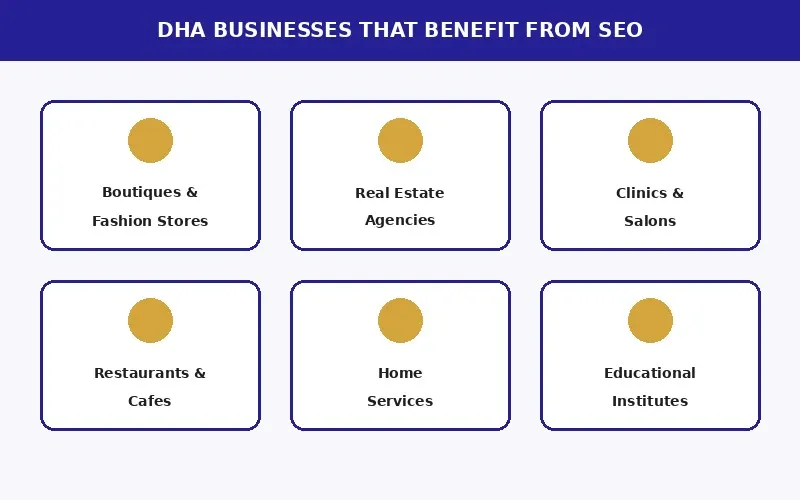
Boutiques, real estate agencies, clinics and salons, restaurants and cafes, home service providers, and educational institutes all show up consistently in this kind of local search behavior. Each of these business types shares one thing in common: their customers are searching nearby, often on mobile, often ready to make a decision quickly. That combination, high local search intent plus low awareness of SEO among business owners, is exactly why training sessions in this community tend to produce such noticeable results.
What Business Owners Usually Get Wrong at First
Before training, most DHA business owners I have worked with assume that having a Facebook page is enough, or that a website alone will automatically bring in customers. Neither is true on its own. A significant number of businesses I have audited in DHA either had no Google Business Profile at all, or had one that was incomplete, unverified, or listing the wrong category entirely.
This gap is not a lack of effort, it is simply a lack of exposure to how local search actually works. Once business owners understand that their Google Business Profile often matters more than their website for local visibility, the shift in priorities happens quickly. I have watched shop owners update their profile mid-session and start seeing profile views increase within days.
What SEO Training Actually Covers
A good training session for this community needs to be practical, not theoretical. Business owners here are busy running daily operations, so the training has to translate directly into actions they can take that same week.
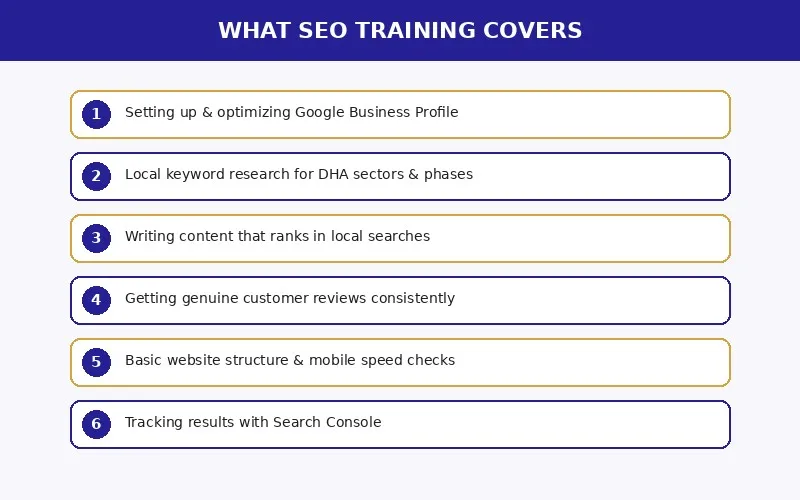
The sessions I run typically walk through setting up and fully optimizing a Google Business Profile, researching local keywords specific to DHA sectors and phases, writing simple content that actually ranks for local searches, building a consistent habit of collecting genuine customer reviews, checking basic website structure and mobile loading speed, and finally, tracking results using Google Search Console so owners can see what is actually working rather than guessing.
I deliberately keep the list focused rather than overwhelming. Business owners walk away with a short list of things they can implement themselves, plus a clear sense of what deserves professional help down the line.
The Results I Have Seen After Training
The most rewarding part of running these sessions is following up a few weeks later. The pattern is consistent enough now that I can almost predict it: businesses that implement even the basics, a complete Google Business Profile, a handful of genuine reviews, and a few locally worded website updates, see a measurable jump in visibility within the first month.
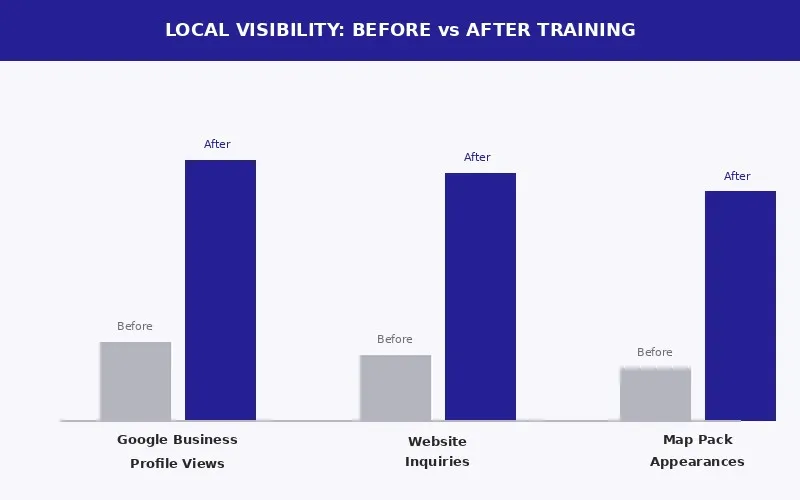
Across the businesses I have tracked post-training, Google Business Profile views typically increase noticeably, website inquiries rise as visibility improves, and appearances in the local map pack, the three-listing block that shows up for “near me” searches, become more frequent. None of this requires an advertising budget. It requires understanding how local search actually evaluates a business, which is precisely what training provides.
Why Training Matters More Than a One-Time Fix
I could audit a business, fix a few settings, and walk away, and many agencies do exactly that. But SEO is not a one-time task, it is an ongoing habit, and DHA business owners who understand the “why” behind each action tend to sustain their results far longer than those who only received a quick fix.
When a boutique owner understands why review responses matter, they keep responding after I am gone. When a clinic owner understands why their service pages need to mention specific DHA phases by name, they apply that logic to every new page they add. Training builds a habit, not just a temporary spike, and habits compound the same way SEO results do.
What This Means for the Wider DHA Community
As more DHA businesses become search-visible, the community as a whole benefits from a healthier, more competitive local marketplace, one where visibility is earned through genuine service quality and clear communication rather than simply who has been established longest. I have seen newer businesses in DHA outrank decades-old competitors within months, purely because they understood how to communicate clearly with both their customers and the search engines connecting them.
That, more than any single tactic, is what SEO training offers a community like DHA: not a shortcut, but a fair chance for good businesses to actually be found by the people already searching for them nearby.