
A couple of years ago, if someone in Bahawalpur told me they were “selling online,” I could safely assume they meant posting product photos on a WhatsApp status or an Instagram story and waiting for direct messages. That is no longer the full picture. I have watched a genuine shift happen here, home-based sellers, small textile brands, and local shop owners setting up actual online stores, some through Instagram and Facebook shops, others through proper websites. The selling instinct has always existed in this city. What is new is the platform, and with that new platform comes a problem most sellers have not yet solved: being found.
Why Smaller Cities Are Suddenly a Bigger Part of Online Selling
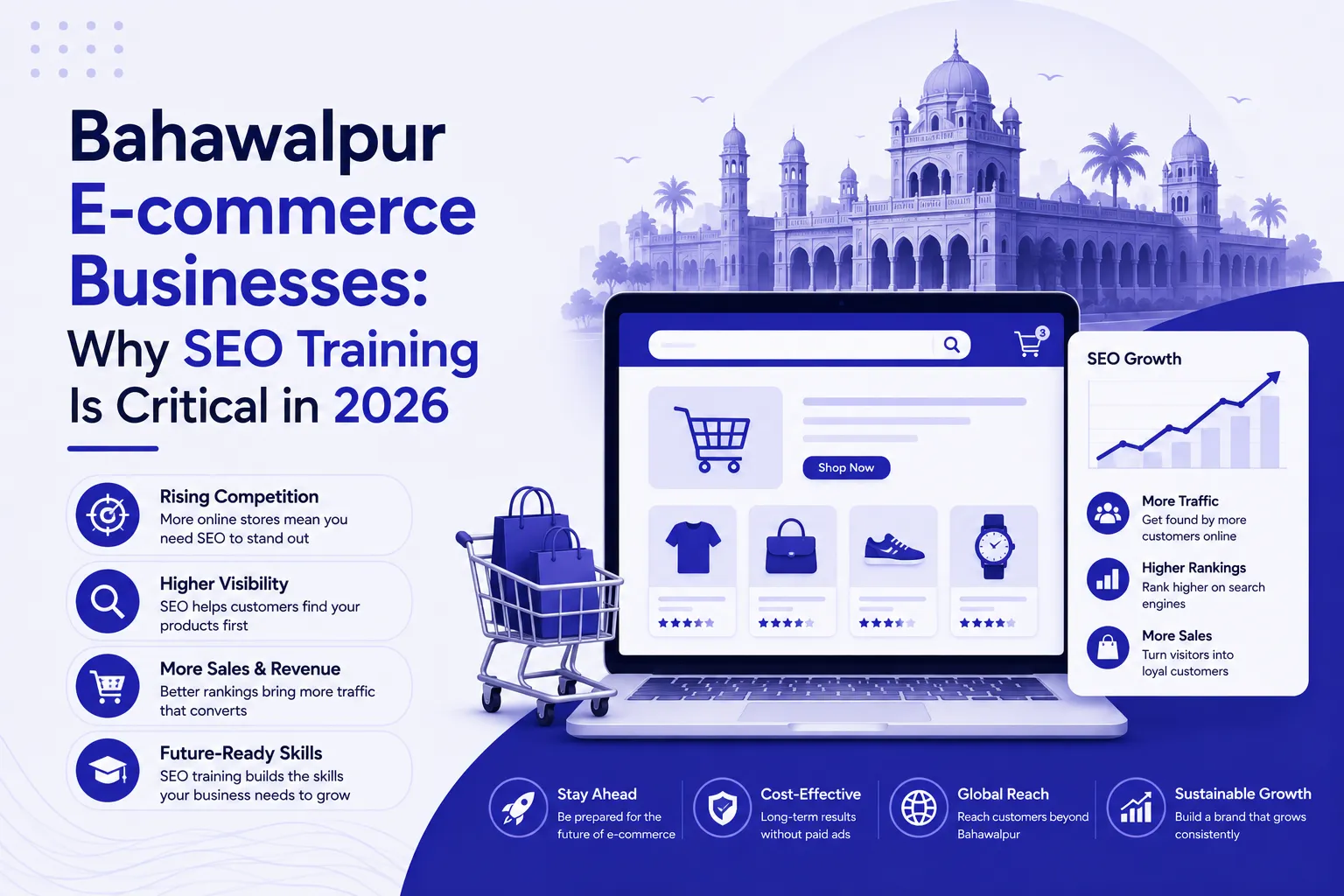
There is a broader trend behind what I am seeing in Bahawalpur specifically, and it is worth naming directly. Online selling is no longer concentrated in Pakistan’s largest cities. Improved mobile internet access, easier payment options, and lower barriers to setting up a store have opened the door for sellers in smaller cities to reach customers well beyond their immediate neighborhood. A handmade textile seller in Bahawalpur is no longer limited to local foot traffic, they are technically able to sell to a customer in Lahore or even abroad.
The word “technically” is doing a lot of work in that sentence, though. Being able to sell nationally and actually being found by someone searching nationally are two very different things. I have audited more than a few Bahawalpur e-commerce pages that were genuinely well-designed, with good product photography and reasonable pricing, that were essentially invisible on Google because nothing about the page was built with search visibility in mind.

The Gap Between Having a Store and Being Findable
This is where I see the most confusion among new e-commerce sellers here. There is a common assumption that once a store is live, whether on Shopify, WooCommerce, Instagram Shop, or a custom-built site, customers will simply find it. In reality, an online store with no SEO foundation behaves a lot like a shop built in a location with no road leading to it. It exists, the products are good, but nobody arrives unless they already knew exactly where to look.
The sellers I have worked with typically fall into one of two categories. Either their product pages have almost no descriptive content beyond a price and a photo, which gives search engines nothing to understand or rank, or their site has decent content but was never structured around what actual customers are searching for, things like “handmade khaddar kurta Bahawalpur” or “affordable wedding wear online Pakistan.” Both problems are fixable, but only once a seller understands that SEO is not an optional add-on to an online store, it is part of what makes the store function as a selling tool in the first place.
Why 2026 Specifically Raises the Stakes
I get asked fairly often why this matters more now than it did a few years ago, and the honest answer is competition density. As more Bahawalpur businesses move online, and they are moving online quickly, the advantage of simply having a store is disappearing. Two years ago, a seller with any kind of website had a real edge over local competitors who had none. Today, that edge belongs to sellers who understand how to be found, not just sellers who exist online.
There is also a shift in how people shop that makes this more urgent. Search behavior increasingly starts broad and specific at the same time, customers search a product type plus a quality signal plus sometimes a location, rather than searching a brand name they already know. A new Bahawalpur seller with no brand recognition is competing entirely on search visibility, not reputation, at least in the early stages. That makes SEO training less of a marketing extra and more of a survival skill for anyone entering e-commerce here in 2026.
Positioning SEO Training as a Business Growth Tool, Not a Technical Chore
This is the reframe I try to get across in every training session I run for e-commerce sellers, and it is the one that tends to change how seriously people take the material. SEO training is not about learning technical jargon for its own sake. It is a business growth tool in the same category as understanding pricing strategy or inventory management, except most sellers have never been taught to think of it that way.
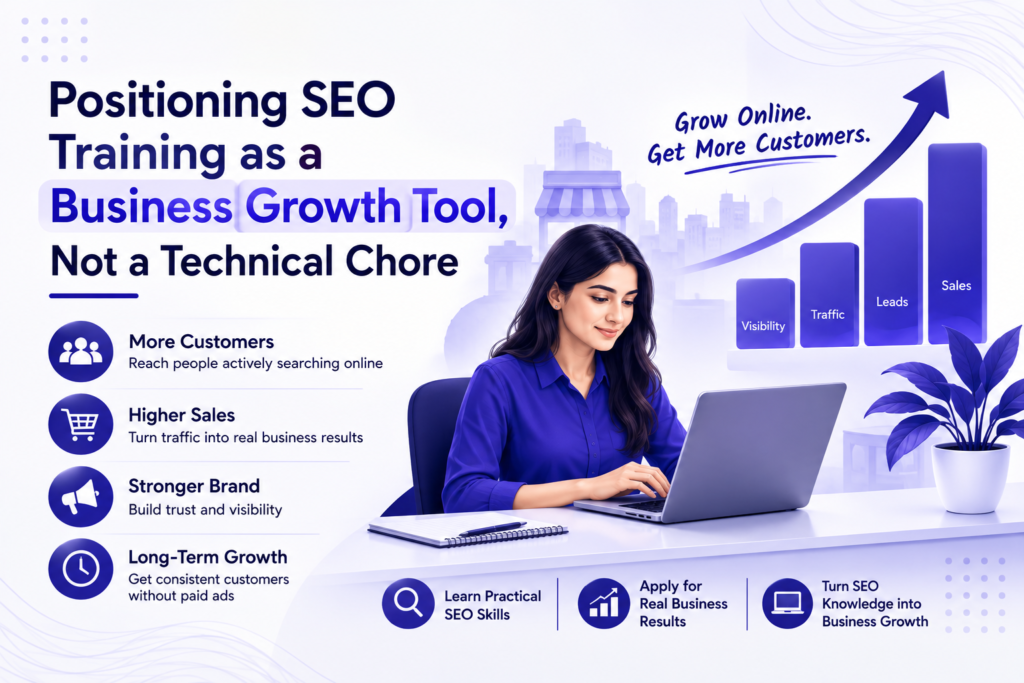
When a Bahawalpur seller understands that writing a proper product description is not busywork but a direct lever on how many potential customers ever see that product, the entire relationship with SEO changes. Training that walks through product page structure, local and national keyword targeting, image optimization for faster load times, and basic content around the brand’s story tends to produce sellers who treat their online store as an actual growth channel rather than a digital brochure that happens to also take orders.
What Training Actually Needs to Cover for E-commerce Sellers
E-commerce SEO is a slightly different discipline from local service business SEO, and training needs to reflect that distinction clearly. Product pages need descriptive, keyword-aware content rather than a single line of specs. Category structure matters more here than for a typical local business site, since customers often browse before they search a specific product. Site speed becomes especially critical for e-commerce, since slow-loading product pages directly cost sales, not just rankings. And because many Bahawalpur sellers rely partly on Instagram and Facebook shops alongside a website, training also needs to cover how to make social storefronts discoverable, not just the website itself.
What This Means for Bahawalpur’s E-commerce Future
I think about this the same way I think about the city’s broader digital shift. The sellers investing in SEO training now, while competition is still comparatively low, are positioning themselves for an advantage that will only get harder to build later. Every month more Bahawalpur businesses move online without this knowledge is a month competitors elsewhere are quietly pulling ahead in search visibility. The opportunity here is real, and it is still open, but I do not expect that window to stay this wide for long.
For a city with genuinely strong products and an increasingly digital-savvy seller base, the missing piece was never ambition. It was the knowledge of how to be found by the customers already searching. That is exactly what SEO training closes.