
SEO typically takes 3 to 6 months to show measurable results for a new website and 4 to 12 weeks for an existing site targeting striking-distance keywords. The exact timeline depends on five factors: your domain’s age and authority, the competition level of your target keywords, the technical health of your site, the quality and frequency of your content, and the strength of your link profile.
This guide breaks down every variable that controls your SEO timeline, what realistic milestones look like month by month, and the specific actions that accelerate results without cutting corners.
The Direct Answer: SEO Timelines by Situation
There is no single answer that applies to every website. The right starting point is identifying which situation matches yours.
| Situation | Expected Timeline | What Drives It |
|---|---|---|
| Brand new website, no authority | 4 to 8 months | Google sandbox effect, zero backlinks, no crawl history |
| Existing site, low competition keywords | 4 to 8 weeks | Pages already indexed, intent match improvement moves rankings fast |
| Existing site, striking distance keywords (positions 5 to 20) | 4 to 12 weeks | On-page optimization and content depth push existing rankings up |
| Existing site, high competition keywords | 6 to 18 months | Requires authority building, content cluster, and link acquisition |
| Local SEO (Google Business Profile focus) | 4 to 10 weeks | Citation consistency and GBP optimization produce faster local pack results |
| E-commerce site, product pages | 3 to 9 months | Depends on crawl budget, schema markup, and category page structure |
| Post-penalty recovery | 3 to 12 months | Manual penalty reconsideration or algorithmic recovery after link cleanup |
What the Google Sandbox Effect Actually Means for New Sites
New websites frequently experience a period of suppressed rankings regardless of how well-optimized their content is. This is informally called the Google sandbox. Google does not officially confirm it as a named system, but the pattern is consistent: new domains take longer to rank for competitive keywords even when their on-page SEO is stronger than existing competitors.
Why New Domains Take Longer to Rank
Google’s ranking systems weigh trust signals that take time to accumulate:
- Crawl history: Google needs to observe a domain over multiple crawl cycles before it assigns reliable authority signals. A site launched last week has no crawl history to draw patterns from.
- Link acquisition patterns: A new site that accumulates 200 backlinks in its first month looks suspicious. Natural link growth is gradual. Google waits to see whether a site’s link profile develops organically before trusting it.
- User engagement data: Established pages have click-through rate history, dwell time data, and return visit patterns. New pages have none of this. Google is essentially ranking them on content signals alone until behavioral data accumulates.
- Domain age: While domain age itself is not a confirmed direct ranking factor, the secondary signals that come with age (backlinks, indexed pages, engagement history) are. A domain registered in 2018 has six years of these signals. A domain registered this month has zero.
What to Do During the Sandbox Period
The sandbox period is not wasted time if you use it correctly:
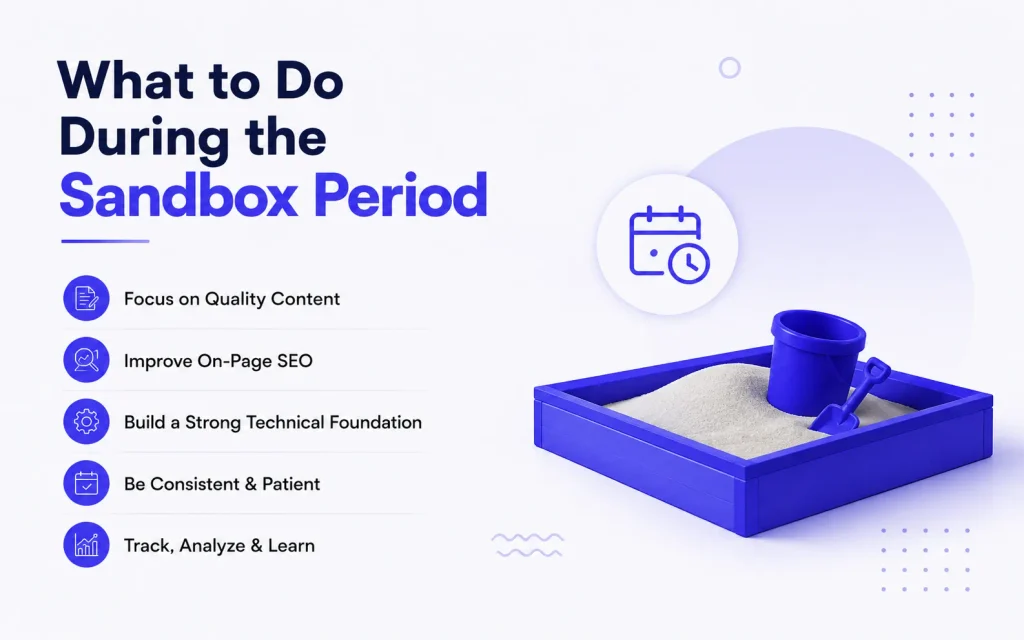
- Build your content foundation. Publish your core service pages, pillar content, and initial blog posts. Content published now will be fully indexed and accumulating authority signals by the time the sandbox effect lifts.
- Submit your sitemap to Google Search Console. Do not wait for Google to discover your pages organically. Submit your XML sitemap immediately at Search Console and request indexing for your most important pages.
- Target long-tail, low-competition keywords first. New sites can rank for specific, low-volume queries within weeks even during the sandbox period. These early wins build crawl history and engagement signals.
- Start earning backlinks from day one. Guest posts, directory listings, local citations, and partner mentions all contribute to a natural-looking early link profile. Focus on relevance over volume.
The Five Variables That Control Your SEO Timeline
Every website’s SEO timeline is determined by the interaction of these five factors. Improving any one of them compresses the timeline. Neglecting any one of them extends it.
Domain Authority and Backlink Profile
Domain authority (a third-party metric from Moz) and Domain Rating (from Ahrefs) are approximations of how much link equity a domain carries. Google uses its own internal version of this through PageRank. Sites with stronger authority rank faster for new content because Google already trusts them.
A site with a Domain Rating of 40 publishing a new blog post can see it rank within days. A brand new site publishing the same post may wait months. The difference is accumulated authority, not content quality.
What this means practically: if your site has low authority, invest in link building alongside content creation from the beginning. Content without authority takes far longer to rank than content on a trusted domain.
Keyword Competition Level
Targeting the wrong keywords for your current authority level is the most common reason businesses see no SEO results after six months. The keyword difficulty score (available in Ahrefs, Semrush, and Ubersuggest) estimates how strong a site needs to be to rank on page one.
| Keyword Difficulty | What It Means | Realistic for |
|---|---|---|
| 0 to 20 (Low) | Low competition, few authoritative pages targeting it | New sites, local businesses, niche topics |
| 21 to 40 (Medium) | Moderate competition, some strong pages in results | Sites with 6 to 12 months of SEO investment |
| 41 to 60 (Hard) | Strong competition, established domains dominating | Sites with real domain authority and content clusters |
| 61 to 100 (Very Hard) | Dominated by high-authority brands | Sites with significant authority, budget, and time |
For businesses in Pakistan targeting local markets, keyword difficulty is typically far lower than for equivalent global English terms. A keyword like “SEO agency in Bahawalpur” has a fraction of the competition of “SEO agency.” This is why local SEO in Bahawalpur and other Pakistani cities produces faster results than broad national campaigns.
Technical Site Health
A technically broken site cannot rank regardless of content quality or backlinks. Technical issues extend every SEO timeline because Google cannot properly crawl, index, or render pages that have underlying infrastructure problems.
The technical issues most likely to delay your SEO results:
- Crawl errors: Pages returning 404 errors, redirect chains longer than two hops, or soft 404s where a broken page returns a 200 status code
- Indexation blocks: Noindex tags, robots.txt blocks, or password protection on pages that should be publicly indexed
- Core Web Vitals failures: Poor LCP (Largest Contentful Paint), high CLS (Cumulative Layout Shift), or slow INP (Interaction to Next Paint) scores suppress rankings, especially on mobile
- Duplicate content: Multiple URLs serving the same content without canonical tags confuses Google about which version to rank
- Missing structured data: For local businesses and e-commerce sites, missing schema markup delays rich result eligibility
Run a full technical audit using Google Search Console and Screaming Frog before any other SEO activity. Fixing technical issues on an existing site often produces ranking improvements within 4 to 8 weeks without any new content or link building.
Content Quality and Publishing Frequency
Content volume alone does not accelerate SEO timelines. Publishing frequency matters only when the content being published is well-structured, intent-matched, and substantive enough to satisfy the search query better than what already ranks.
The content signals that most directly affect ranking speed:
- Search intent match: A page that matches the format Google expects for a query (blog post vs. service page vs. product listing) ranks faster than a page that mismatches it, regardless of how well-written it is
- Topical depth: A page that covers a topic comprehensively, addressing the main query and related subtopics, signals topical authority faster than a short page targeting one keyword
- Content freshness: For time-sensitive queries, Google favors recently updated content. Refreshing an existing page with new data and expanded coverage can produce ranking improvements within weeks
- Internal linking: New pages that receive internal links from established, high-authority pages on the same site get crawled and indexed faster and inherit partial authority from those pages
Link Acquisition Rate and Quality
Backlinks remain one of Google’s strongest ranking signals. The speed at which a site acquires relevant, authoritative backlinks is directly correlated with how quickly new content ranks.
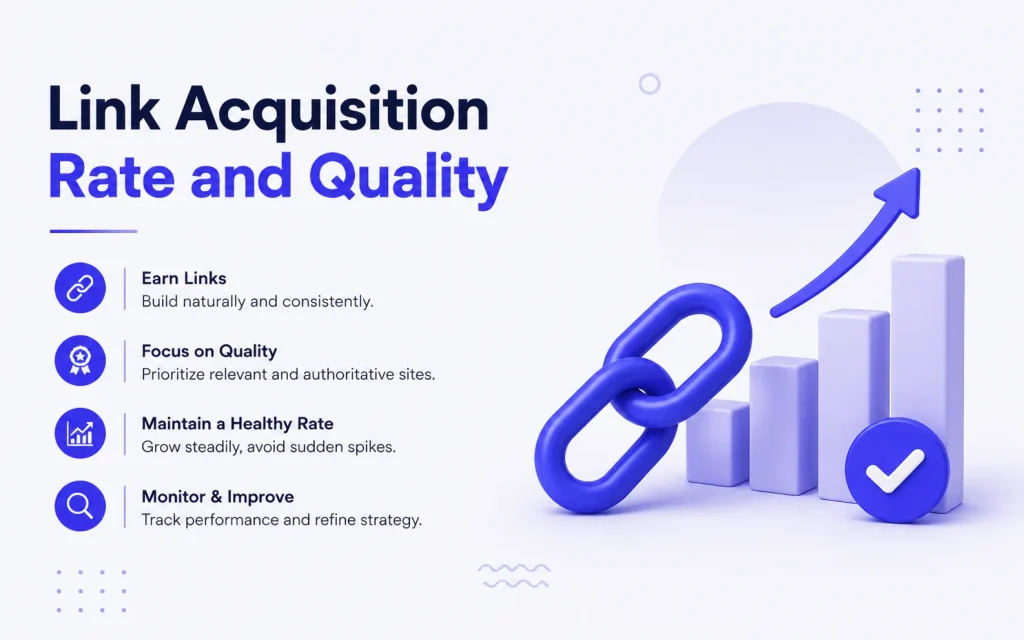
One high-quality backlink from a relevant industry publication produces more ranking impact than fifty links from generic directories. For local businesses in Pakistan, a mention in a local business directory, a regional news outlet, or an industry association carries far more weight than an offshore link farm.
Realistic link acquisition timelines:
- Local citations (GBP, Yelp, local directories): Impact visible in local pack rankings within 4 to 8 weeks of consistent NAP (Name, Address, Phone) citation building
- Guest posts on relevant sites: Ranking impact typically visible 6 to 10 weeks after the link goes live, once Google recrawls the linking page
- Editorial mentions and PR: Highest-impact links. Impact visible within 2 to 4 weeks on sites Google crawls frequently
- Competitor backlink replication: Identifying and acquiring links from sites already linking to competitors is a reliable way to compress the authority gap within 3 to 6 months
Month-by-Month SEO Timeline: What to Expect
This timeline applies to a new or recently launched website with a clean technical foundation, consistent content publishing, and active link building. Results accelerate or decelerate depending on the five variables above.
Months 1 and 2: Foundation and Indexation
In the first two months, the primary goal is getting your core pages crawled and indexed correctly. Ranking movement at this stage is minimal for most keywords, but the groundwork laid here determines everything that follows.
- Submit XML sitemap to Google Search Console and request indexing for all key pages
- Resolve any crawl errors, redirect issues, or noindex blocks identified in the initial audit
- Publish your core service or product pages with full on-page optimization: title tags, H1, meta descriptions, URL slugs, and internal links
- Set up Google Analytics 4 and Search Console to track impressions, clicks, and keyword data from day one
- Begin local citation building if you are a local business (Google Business Profile, Facebook Business, relevant local directories)
What you will see in Search Console by end of month 2: impressions for long-tail keyword variations, crawl coverage expanding to include new pages, and initial click data for brand name queries.
Months 3 and 4: Early Ranking Movement
By month three, Google has crawled your site through multiple cycles and is beginning to assign more stable ranking positions. This is where most sites see their first organic traffic from non-brand keywords, almost always from low-competition, long-tail queries.
- Identify which pages are generating impressions but few clicks in Search Console. These are pages ranking in positions 11 to 30 that need on-page strengthening.
- Refresh any content published in months one and two with expanded sections, updated data, and improved internal linking
- Publish supporting content that links back to your core pages, building internal topical authority
- Begin active outreach for backlinks: guest posts, partnership mentions, and local press
Realistic traffic at this stage: low but measurable. A well-optimized new site in a low-competition local market like Bahawalpur or a specific Pakistani city niche can see 50 to 200 monthly organic visits by end of month four.
Months 5 and 6: Compounding Momentum
Month five is where the compounding effect of consistent SEO work becomes visible. Pages that were ranking in positions 15 to 25 begin moving into the top 10. Click-through rates improve as title tags and meta descriptions are refined based on actual impression data.
- Use Search Console’s Performance report to identify keywords where your pages are generating over 100 impressions per month but ranking below position 10. These are your highest-priority optimization targets.
- Build or strengthen your content cluster: publish subtopic posts that link to your main pillar pages
- Continue link building. By month six, you should have at least 10 to 20 referring domains from relevant sources
- Review Core Web Vitals scores in Search Console and address any pages flagged as Poor
Sites in competitive markets (Karachi, Lahore, or US city-level competition) will still be building at this stage. Sites in lower-competition local markets should be seeing consistent page-one rankings for their primary target keywords.
Months 7 to 12: Authority and Scale
From month seven onward, SEO results compound. Each new piece of content ranks faster than the last because the domain has accumulated authority. Each new backlink has more impact because the site’s existing authority amplifies it.
- Expand keyword targeting to medium-difficulty terms now that your domain has demonstrated authority to Google
- Audit and update your oldest content: pages published in months one and two often benefit significantly from a content refresh at the six-month mark
- Build out location-specific pages if you serve multiple cities, using your established domain authority to rank faster in new geographic targets
- Track and report month-over-month organic traffic growth, keyword ranking distribution (how many keywords rank in positions 1 to 3, 4 to 10, 11 to 20), and conversion rate from organic traffic
Local SEO Timeline: Why It Moves Faster
Local SEO consistently produces results faster than national or global organic SEO for one reason: the competition pool is smaller and the primary ranking factor, Google Business Profile optimization, responds to changes quickly.
Google Business Profile vs. Organic Rankings: Timeline Comparison
| Tactic | Expected Timeline to Visible Results | What Triggers the Change |
|---|---|---|
| Complete and optimize GBP profile | 1 to 3 weeks | Google re-evaluates the listing after changes are verified |
| Build 10 to 20 consistent local citations | 4 to 8 weeks | Citation signals accumulate and strengthen local pack presence |
| Generate 10 or more new Google reviews | 2 to 6 weeks | Review volume and recency directly influence local pack rankings |
| Publish city-specific service pages | 6 to 12 weeks | Organic rankings for location-based queries improve as pages index and accumulate signals |
| Earn local backlinks (press, directories) | 4 to 10 weeks | Local relevance signals strengthen both GBP prominence and organic rankings |
For small businesses in Pakistan targeting city-specific searches, the fastest path to page-one visibility is Google Business Profile optimization combined with consistent local citation building. She Earn’s local SEO services in Bahawalpur, Karachi, and Lahore are structured around this exact sequence.
Why Your SEO Is Not Showing Results Yet
If you have been doing SEO for three or more months and are seeing no measurable ranking movement, one or more of these issues is almost always the cause.
The Most Common Reasons SEO Stalls
- Your pages are not indexed. Run a
site:yourdomain.comsearch in Google. If your key pages do not appear, they are not in Google’s index and cannot rank. Check Search Console for noindex tags, crawl errors, or coverage exclusions. - You are targeting keywords that are too competitive for your current authority. A new site targeting “SEO agency Pakistan” is competing against domains with years of authority. Shift to specific long-tail and local variations until your domain authority grows.
- Your content does not match the search intent. A service page optimized for an informational keyword will not rank regardless of on-page optimization. Check what content format dominates the top five results for your target keyword and match it.
- You have no backlinks. Content without any external links struggles to rank in competitive niches. Even five to ten relevant backlinks from legitimate sources make a measurable difference for new sites.
- Your Core Web Vitals are failing. Check your PageSpeed Insights score for mobile. A failing LCP or CLS score on mobile suppresses rankings across your entire site, not just on slow pages.
- You are checking rankings too early or inconsistently. Rankings fluctuate daily. Checking your position every day creates a misleading picture. Track average position in Search Console over 28-day periods for meaningful trend data.
- You changed your site structure without proper redirects. Changing URLs, deleting pages, or restructuring navigation without 301 redirects destroys the authority those pages had accumulated. Search Console will show a spike in 404 errors if this has happened.
How to Speed Up Your SEO Results Without Risking Penalties
There is no legitimate way to make SEO work in days rather than weeks. But there are specific actions that consistently compress timelines without the risk of algorithm penalties or manual actions.
The Fastest Legitimate SEO Acceleration Tactics
- Target striking-distance keywords first. In Google Search Console, filter your Performance report to show keywords where your pages rank in positions 5 to 20. These pages already have authority. Improving their on-page optimization, adding internal links from stronger pages, and deepening the content often moves them into the top 5 within 4 to 8 weeks.
- Refresh underperforming existing content before publishing new content. An existing page that ranked on page two a year ago and has since dropped to page three responds faster to optimization than a brand new page on the same topic. Update the title tag, expand the content, improve internal links, and request re-indexing.
- Fix technical issues before any other activity. A site with crawl errors, slow page speed, or indexation problems will not respond to content improvements or link building until the technical foundation is repaired. Technical fixes produce the fastest visible improvements for established sites.
- Build internal links from your highest-authority pages to your newest content. A new page that receives internal links from your homepage or top-ranking blog posts gets crawled faster and inherits authority signals. This alone can compress the indexation-to-ranking timeline by several weeks.
- Optimize for local pack rankings alongside organic SEO. Google Business Profile ranking improvements happen faster than organic ranking changes. Prioritizing GBP, review generation, and local citations runs parallel to your organic SEO timeline and produces visible results sooner.
- Publish content in clusters, not in isolation. A single blog post on a topic ranks slower than a pillar page supported by three to five related subtopic posts all linking to each other. Publishing a content cluster at launch gives Google a complete picture of your topical authority from the start.
SEO Timeline Checklist by Month
Month 1 to 2
- Technical audit completed and critical errors fixed
- XML sitemap submitted to Google Search Console
- All key pages indexed and verified in Search Console
- Core pages published with full on-page optimization
- Google Analytics 4 and Search Console connected and tracking
- Google Business Profile claimed, completed, and verified (local businesses)
Month 3 to 4
- Long-tail keyword rankings appearing in Search Console impressions data
- First organic traffic from non-brand keywords visible in GA4
- Striking-distance keywords identified and targeted for on-page improvement
- Content cluster publishing begun: pillar page plus supporting subtopic posts
- First backlinks acquired from relevant sources
- Local citations built across 10 or more consistent directories (local businesses)
Month 5 to 6
- Multiple keywords ranking in positions 1 to 10
- Consistent monthly organic traffic growth visible in GA4
- Content refresh cycle started on month-one posts
- Core Web Vitals passing for all key pages
- 10 or more referring domains from relevant sources
Month 7 to 12
- Expanding to medium-difficulty keyword targets
- New content ranking faster than in earlier months due to accumulated authority
- Location-specific page expansion underway if targeting multiple cities
- Monthly reporting tracking keyword distribution, organic traffic, and conversions
Frequently Asked Questions About SEO Timelines
How Long Does SEO Take for a New Website?
A new website with no existing domain authority typically takes 4 to 8 months to generate consistent, measurable organic traffic. The first two months are primarily indexation and foundation building. Ranking movement for low-competition keywords begins in months three and four. Consistent page-one rankings for primary target keywords are realistic by months six to eight for local and niche markets, and 9 to 12 months or longer for competitive national terms.
Can SEO Show Results in 30 Days?
Yes, in specific scenarios. Fixing a critical technical issue like an accidental sitewide noindex tag can produce rapid ranking recovery within days of the fix being crawled. An existing site with authority targeting a new low-competition long-tail keyword can rank within two to four weeks. Google Business Profile optimizations for local businesses can improve local pack rankings within three to four weeks. For brand new sites with no authority, page-one rankings in 30 days are not realistic for any competitive keyword.
How Long Does It Take to Rank Number One on Google?
Reaching position one for a competitive keyword typically takes 12 to 24 months of sustained SEO investment for sites starting from scratch. A study by Ahrefs found that only 5.7% of newly published pages reach the top 10 within a year, and those that do almost always come from domains with existing authority. For local and low-competition keywords, position one is achievable in 3 to 6 months with strong on-page optimization, relevant backlinks, and correct search intent matching.
Why Is My SEO Not Working After 6 Months?
Six months of SEO with no measurable results almost always traces to one of four causes: targeting keywords too competitive for your current domain authority, pages not being properly indexed in Google’s search index, content that does not match the search intent Google expects for your target queries, or a technical issue suppressing crawlability or rankings sitewide. Run a site indexation check, review your keyword difficulty targets, audit your top pages for intent mismatch, and check Search Console for crawl errors and Core Web Vitals failures before concluding that SEO is not working.
Does Paid Advertising Speed Up SEO?
No. Google Ads has no direct influence on organic search rankings. Google has confirmed this explicitly. Running paid search campaigns alongside SEO does not compress the organic ranking timeline. The indirect benefit is data: Google Ads conversion data and keyword performance data can inform which organic keywords are worth prioritizing, and paid traffic can provide early user engagement signals on new pages. But the organic ranking timeline is unaffected by ad spend.
SEO Takes Time. The Work You Do Now Compounds Later.
The businesses that see the best SEO results at the 12-month mark are almost always the ones that started with realistic expectations at month one. They fixed their technical foundation before publishing content. They targeted keywords matched to their current authority level. They built content clusters rather than isolated posts. They earned backlinks consistently rather than in one burst.
The timeline is not a waiting game. It is a compounding investment. Every optimized page, every earned backlink, and every technical improvement contributes to a site that ranks more pages faster over time.
If you want a structured plan for your specific site, timeline, and market, the She Earn team is available to audit your current SEO position and map a realistic path to results. If you want to learn the process yourself and apply it to your own business or clients, She Earn’s SEO courses are built to take you from foundation to execution with Pakistan-market context built in.